
RV bike rack guide
How to choose an RV bike rack: 5 checks in order
A practical order of checks that narrows the choice to racks the manufacturer actually supports for your RV — with live numbers from the database.
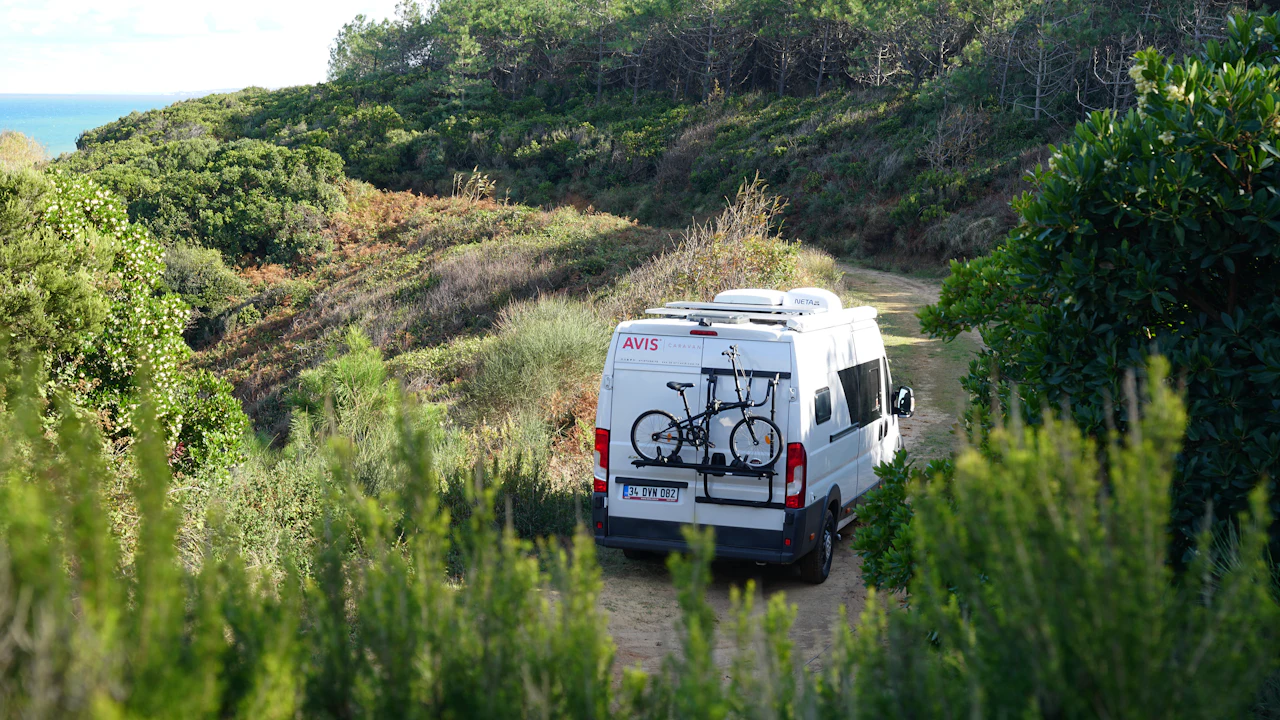
Most hitch bike racks are designed and tested for cars, SUVs and pickups. An RV changes the load: the rack can sit far behind the rear axle, the receiver may be bolted to a frame extension, and a towed trailer moves differently from the vehicle pulling it. That is why manufacturers approve, limit or exclude RV use separately. These five checks, done in order, narrow the choice to racks the maker actually supports for your setup.
1. Name the exact RV use
Motorhome, fifth wheel, travel trailer and flat-towed vehicle are four different answers. Across the database the picture is very uneven:
| RV use | Supported | With conditions | Excluded | Not verified |
|---|---|---|---|---|
| Motorhomes | 10 | 32 | 20 | 12 |
| 5th Wheels | 4 | 13 | 40 | 17 |
| Travel Trailers | 8 | 17 | 39 | 10 |
| Flat Tow | 1 | 7 | 24 | 42 |
Only 4 of 74 racks have manufacturer support for all four uses. A rack that is fine on a motorhome can be explicitly excluded on a travel trailer, so start the search with the RV type, not the rack.
2. Match the mount point
Note the receiver size, its class and tongue-weight rating, and whether it is frame-mounted or attached to a bumper. A bumper-mounted receiver is a different installation from a chassis receiver, and makers treat it that way. Read the receiver label and the RV manual before choosing a rack. Of the 48 racks with any RV support in the database, 38 list a 2-inch receiver.
3. Weigh the bikes — and use the RV number
E-bikes often weigh 50 lb or more. The per-bike limit printed on a product page is usually the road limit; for RV use several makers publish a lower figure. In the current records, 1 racks list an RV per-bike limit below their normal road limit, for example:
- Yakima OnRamp: 66 lb on the road, 40 lb per bike in RV use
The e-bike weight checker compares your bike against those RV limits.
4. Count trays and bikes in the RV configuration
Some racks are approved for RV use only with a specific number of trays, or lose approval when an add-on tray is fitted. Check the exact configuration in the rack record, not just the model family name.
5. Remove anything in the load path the maker did not approve
Hitch extenders, swing-away arms, adapters and covers change leverage on the receiver. 14 records carry a manufacturer condition about extensions or extenders — see hitch extenders and RV bike racks.
Check your exact rack
Pick the rack and RV type to see the manufacturer status, limits and conditions.